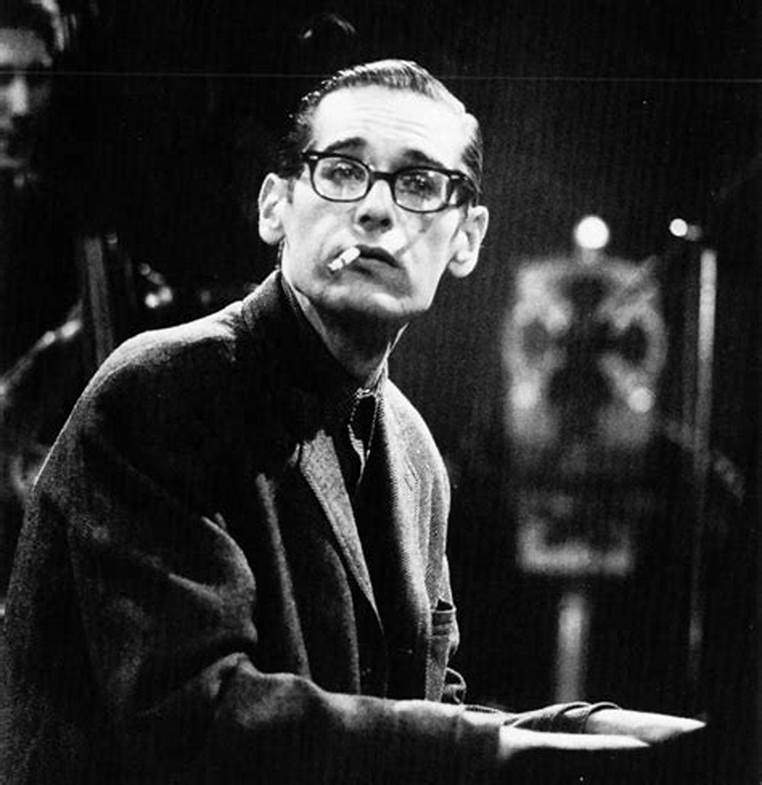
“The creative process is not controlled by a switch you can simply turn on or off; it’s with you all the time.”
— Bill Evans
If jazz were a language, Bill Evans spoke it with the quiet intensity of a poet—carefully chosen notes, whispered emotions, and a harmonic depth that still leaves musicians in awe. Though not as flashy as some of his contemporaries, Evans was a revolutionary. His sound, introspective and hauntingly beautiful, reshaped the piano trio and helped define the modern jazz vocabulary.
Let’s step into his world.
Career Highlights: A Lyrical Architect of Modern Jazz
Bill Evans was born in 1929 in Plainfield, New Jersey. By age six, he was studying classical piano, immersing himself in the works of Debussy, Ravel, and Chopin. That classical foundation would deeply influence his touch and harmonic sense throughout his jazz career.
In 1958, Evans joined Miles Davis’ sextet, a pivotal move that changed the course of jazz. Though his time with Miles was brief, it was crucial. His modal approach and harmonic subtleties laid the groundwork for Kind of Blue (1959), the most iconic jazz album ever recorded.
🎧 Listen closely to “Flamenco Sketches” on Kind of Blue—Evans’ fingerprints are all over it. PLAY “Flamenco Sketches”
After departing Miles’ group, Evans formed what would become the most influential piano trio in jazz history with Scott LaFaro (bass) and Paul Motian (drums). Together, they redefined the trio dynamic—not as piano backed by rhythm, but as three voices in conversation.
Three Essential Albums to Hear Bill Evans’ Genius
1. Waltz for Debby (1961)
Key tracks: “Waltz for Debby,” “My Foolish Heart,” “Detour Ahead”
Recorded live at the Village Vanguard, this album is a gentle, lyrical masterpiece. It captures the almost telepathic interplay between Evans, LaFaro, and Motian. The title track—a lullaby written for his young niece—is jazz as a form of meditation.
Why listen: This is the Evans Trio at its most emotionally transparent. It’s romantic, melodic, and deeply human.
2. Sunday at the Village Vanguard (1961)
Key tracks: “Gloria’s Step,” “Alice in Wonderland,” “Solar”
Recorded the very same day as Waltz for Debby, this sister album leans more into rhythmic complexity and improvisational daring. Scott LaFaro’s bass takes center stage, often blurring the line between soloist and accompanist.
Why listen: It’s one of the most interactive, democratic jazz trios ever captured on tape—and LaFaro’s final recording before his tragic death 10 days later.
🎧 PLAY “Sunday at the Village Vanguard”
3. You Must Believe in Spring (1980)
Key tracks: “You Must Believe in Spring,” “We Will Meet Again,” “Theme from MASH”*
Evans’ later years were marked by loss, addiction, and emotional turmoil, but this posthumously released album shows an artist still searching for beauty. The emotional depth here is staggering—each track feels like a letter to someone he’s lost. Without a doubt, my favorite album by Evans.
Why listen: Evans turns grief into grace. His playing is as expressive and cinematic as ever.
🎧 PLAY “You Must Believe in Spring”
Lesser-Known Facts & Influences
- Debussy & Ravel Were His North Stars
Evans brought classical harmony into jazz like no one before him. His chord voicings mimic the textures of orchestral compositions. You can hear echoes of Debussy in almost everything he played. - Duo Magic with Jim Hall
Evans’ duets with guitarist Jim Hall on Undercurrent (1962) and Intermodulation (1966) are often overlooked but show another dimension of his subtlety and phrasing. It’s chamber jazz at its finest. - A Reluctant Performer, A Relentless Thinker
He was famously self-critical, and often hesitant to perform. He saw jazz as a “process” rather than a product—more about exploration than exhibition. - Inventor of the Modern Jazz Voicing
Ask any jazz pianist what the “Bill Evans voicing” is, and they’ll show you: rootless left-hand chords stacked in fourths and thirds, creating floating harmonies that feel modern even today.
Why He’s Considered One of the Greatest
Bill Evans didn’t revolutionize jazz with speed or volume—he did it with intimacy. He invited listeners in, demanded their attention through softness, and rewarded it with harmonic richness and emotional honesty.
His influence is still deeply felt—across jazz, classical crossover, film scores, and lo-fi. You can hear shades of Evans in Herbie Hancock, Chick Corea, Brad Mehldau, and even contemporary artists like Robert Glasper.
He didn’t just play notes. He painted with them.
Listen to This
Start with Waltz for Debby. Let it drift through your room late at night. Then listen to Sunday at the Village Vanguard with headphones, eyes closed. Finish with You Must Believe in Spring, and don’t be surprised if it brings a lump to your throat.
Evans once said, “Music should enrich the soul—it should teach spirituality by showing a person a portion of himself that he would not discover otherwise.”
And he meant every word.
Recommended Playlist:
🎧PLAY Bill Evans Jazz Classics
Further Listening:
- Portrait in Jazz (1959)
- Undercurrent (1962, with Jim Hall)
- Alone (1968, solo piano)
Want more deep dives into jazz legends? Leave a comment or share your favorite Bill Evans track—I’d love to hear what moves you.

 Listening Room Living Room
Leave a comment